
FOLIO 01 · OPENING BALANCE
Books that balance, learned one entry at a time.
Recorded courses in UK bookkeeping, VAT, payroll and year-end accounts — for owners keeping their own books, people moving into bookkeeping, and whoever has just been handed the payroll. Watch online, at your own pace, for 24 months.
| Dr | Cr |
|---|---|
| Courses and routes | 15 |
| Recorded lessons | 729 |
| Hours of video | 156 |
| Access to each course | 24 months |

FOLIO 02 · CHART OF ACCOUNTS
Where do you stand?
The 15 courses and routes sit on four shelves, sorted by your situation rather than by topic. Find your line and open it.
| Code | Shelf | Courses | From–to | Link |
|---|---|---|---|---|
| 1000 | Starting from a blank ledgerYou have never posted a journal and the words debit and credit still sound like opposites of each other. | 4 | £531–£2,346 | Open the shelf : Starting from a blank ledger |
| 2000 | Keeping your own booksYou run a business, the receipts live in a shoebox and the VAT return arrives faster than you would like. | 3 | £644–£779 | Open the shelf : Keeping your own books |
| 3000 | Running a payrollPeople are paid by you, or soon will be: PAYE, National Insurance, pensions and the monthly submission. | 4 | £617–£1,837 | Open the shelf : Running a payroll |
| 4000 | Closing the yearThe books are kept. Now they need to become accounts, a tax return and numbers someone can decide with. | 4 | £1,154–£3,174 | Open the shelf : Closing the year |
FOLIO 03 · 6 APRIL TO 5 APRIL
A UK tax year, month by month
What falls due for a small business, month by month, and the course that teaches it. Scroll the strip sideways.
-
M01 · APR
April
- 5 April — the tax year ends. 6 April — the next one begins.
- New tax codes and thresholds apply from the first payday of the new year.
-
M02 · MAY
May
- 31 May — every employee on the payroll at 5 April must have their P60 for the year just ended.
-
M03 · JUN
June
- Every pay run — assess new and changed workers for auto-enrolment, deduct their pension contributions and pay them over to the scheme on time.
-
M04 · JUL
July
- 6 July — P11D and P11D(b) forms are due for benefits not put through the payroll.
- 22 July — Class 1A National Insurance on those benefits is due if paid electronically.
-
M05 · AUG
August
- VAT quarters depend on your stagger. The return and payment are due one month and seven days after a quarter ends: for a quarter to 30 June, by 7 August.
-
M06 · SEP
September
- Month-end, as every month: reconcile the bank to the statement, clear anything left in suspense, run payroll and post the month.
-
M07 · OCT
October
- 5 October — if you started working for yourself in the tax year that ended on 5 April, this is the date to tell HMRC.
- 31 October — paper Self Assessment returns are due.
-
M08 · NOV
November
- For a VAT quarter to 30 September, the return and payment are due by 7 November.
- Businesses on the annual accounting scheme work to a different timetable.
-
M09 · DEC
December
- A small company with a 31 March year end, after its first year: accounts due at Companies House by 31 December, corporation tax payable by 1 January.
-
M10 · JAN
January
- 31 January — online Self Assessment returns are due for the tax year that ended last April, with the balancing payment and the first payment on account.
- The second payment on account follows on 31 July.
-
M11 · FEB
February
- Month-end: reconcile the bank, run payroll, post the month.
- With 5 April close, a cash forecast shows how the tax year will finish before it does.
-
M12 · MAR
March
- 31 March is a common year end, and sole traders often draw up to 31 March or 5 April.
- Before the accounts: accruals, prepayments, depreciation and stock.
FOLIO 04 · A WORKED PAGE
Six entries, one trial balance
A fictional joiner’s first month in business. Every transaction goes in twice — once on the debit side, once on the credit — so the two columns must agree.
| Date | Narrative | Dr | Cr | £ |
|---|---|---|---|---|
| 01 Apr | Owner pays savings into the business account | 1200 Bank | 3000 Capital | 5,000.00 |
| 03 Apr | Workbench and power tools bought | 0030 Equipment | 1200 Bank | 1,860.00 |
| 09 Apr | Fitted kitchen sold to a customer on 30 days’ credit | 1100 Trade debtors | 4000 Sales | 2,415.00 |
| 14 Apr | Timber and fixings paid for | 5000 Purchases | 1200 Bank | 948.00 |
| 20 Apr | Workshop rent for the month | 7100 Rent | 1200 Bank | 650.00 |
| 28 Apr | Owner takes cash for personal use | 3050 Drawings | 1200 Bank | 400.00 |
| Account | Dr £ | Cr £ |
|---|---|---|
| 0030 Equipment | 1,860.00 | |
| 1100 Trade debtors | 2,415.00 | |
| 1200 Bank | 1,142.00 | |
| 3000 Capital | 5,000.00 | |
| 3050 Drawings | 400.00 | |
| 4000 Sales | 2,415.00 | |
| 5000 Purchases | 948.00 | |
| 7100 Rent | 650.00 | |
| Totals | 7,415.00 | 7,415.00 |
Balanced
The kind of page worked on screen in unit 2 of ‘Double Entry from a Blank Page’ — Debits, credits and T-accounts. The figures are an illustration. See how a lesson runs
FOLIO 05 · ROUTE PLANNER
How long will it take?
Pick what you need and how much time you have each week. The plan below is every course on that shelf, in the order to watch it.
A/C 2000 · KEEPING YOUR OWN BOOKS
- 01VAT Returns under Making Tax Digital£718
- 02VAT Schemes Compared: Flat Rate, Cash, Annual and Margin£644
- 03Self Assessment for the Self-Employed£779
- Lessons
- 114
- Running time
- 22 h 14 min
- At 3 h a week
- 8 weeks
- Total
- £2,141
A/C 3000 · RUNNING A PAYROLL
- 01Payroll from Scratch: PAYE, National Insurance and RTI£884
- 02Workplace Pensions and Auto-Enrolment for Payroll£617
- 03Payroll Year-End, Benefits and Expenses£673
- Lessons
- 113
- Running time
- 22 h 19 min
- At 3 h a week
- 8 weeks
- Total
- £2,174
or take the whole route: The Payroll Route: First Payslip to Year-End £1,837
A/C 1000 · STARTING FROM A BLANK LEDGER
- 01Double Entry from a Blank Page£531
- 02Bank Reconciliation and the Month-End Close£586
- 03Cloud Bookkeeping: Setting Up and Running a Live File£963
- Lessons
- 125
- Running time
- 25 h 14 min
- At 3 h a week
- 9 weeks
- Total
- £2,080
or take the whole route: The Bookkeeper Route: Blank Ledger to VAT Return £2,346
A/C 4000 · CLOSING THE YEAR
- 01Year-End Accounts for Sole Traders and Partnerships£1,154
- 02Limited Company Year-End: From Trial Balance to Filed Accounts£1,492
- 03Management Accounts and Cash-Flow Forecasting£1,268
- Lessons
- 137
- Running time
- 32 h 45 min
- At 3 h a week
- 11 weeks
- Total
- £3,914
or take the whole route: The Practice Route: Books, Payroll, VAT and Year-End £3,174
The catalogue in figures
- 1512 courses + 3 routes
- 729recorded lessons
- 156hours of video
- 24months of access per course
FOLIO 07 · NOTES TO THE ACCOUNTS
The fine print, up front
What a course here is not, said before you pay rather than after.

- Recorded and streamed only. Every lesson is a video you watch online, in a browser, whenever suits you.
- No tutor and no marking. Exercises are worked through on screen, so you check your own answers against ours.
- Not downloadable. Lessons stream; there are no files to keep.
- No certificate or accreditation. The courses teach the work itself; they do not lead to a qualification.
- Education, not advice. Tax lessons explain how the rules work, not what you should do in your situation. Rates and thresholds are taught for a stated tax year.
- Access lasts 24 months. Watch each course as often as you like for 24 months.
FOLIO 08 · AT THE DESK
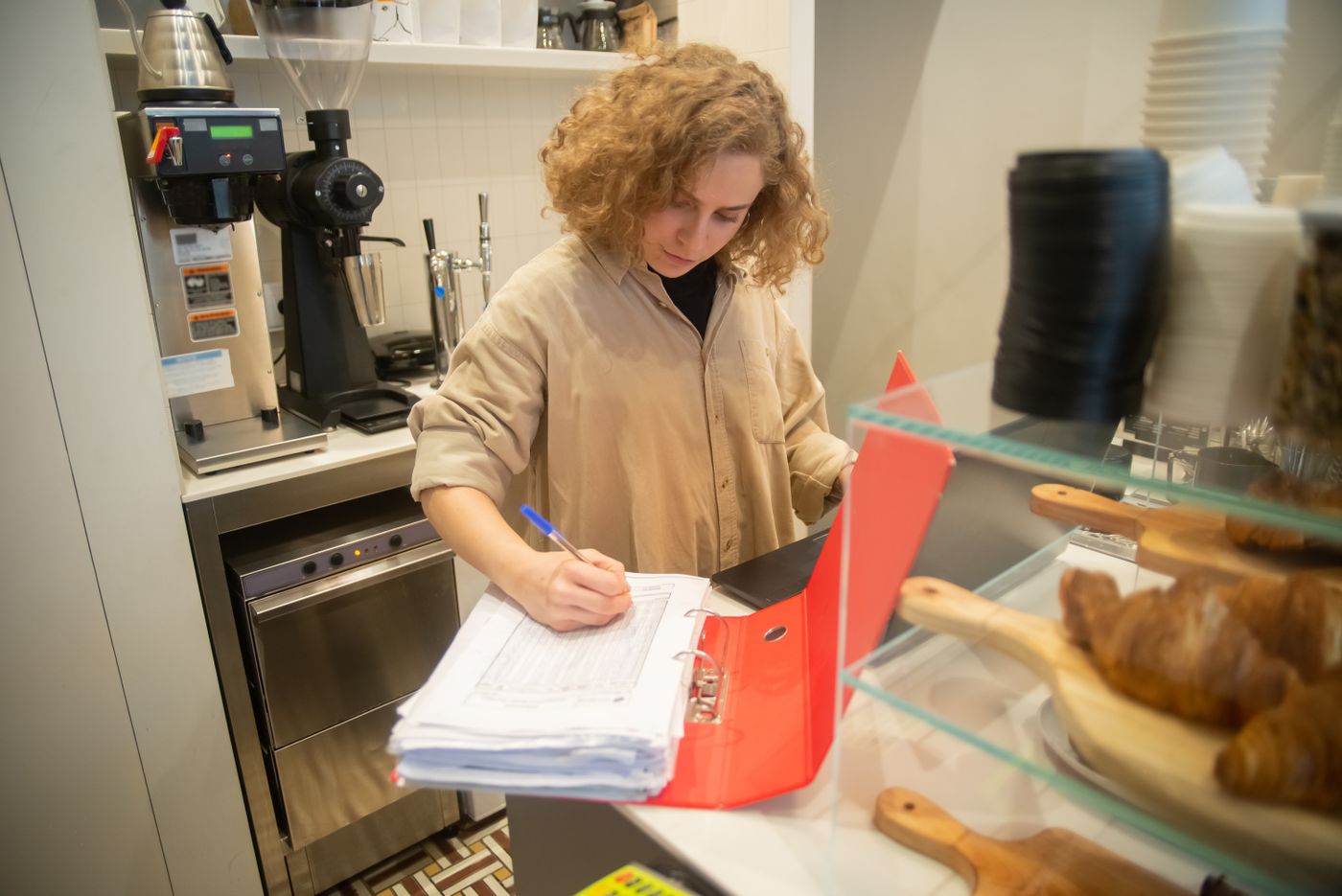
Books get kept everywhere




FOLIO 09 · QUERIES
Questions before you buy
If yours is not here, ask. The chat in the corner of every page is answered by a person, or you can write to us.
How do I get access after paying?
When payment goes through you land on your order page. The access details for each course arrive by email within one working day. Keep the order page: its address does not change, and it shows your reference if you need to get in touch.
How long can I watch?
Each course stays open to you for 24 months. Watch the lessons as often as you like in that time, on any device with a browser and a steady connection.
Is there a tutor or marking?
No. The lessons are recorded, and every exercise is worked through on screen so you can check your own answer. Questions about choosing a course or about your order go to the chat or to our contact page.
Do I get a certificate?
No. The courses do not lead to a certificate, a qualification or membership of a professional body. They teach the work: posting, reconciling, running payroll, preparing returns and accounts.
Which course should I start with?
If debit and credit still feel like a coin toss, start with ‘Double Entry from a Blank Page’. Otherwise find the shelf that describes where you are, or use the route planner to see a whole shelf in order.
Will the tax content be out of date?
Tax rates and thresholds change every April. Lessons that use them say which tax year they are teaching, so you know which figures to check against the current year. Each course page lists exactly what that course covers.
Can I get a refund?
You can cancel within 14 days of buying while access has not yet begun. At checkout you ask for access to begin straight away and confirm that, once it does, the 14-day right to cancel is lost. If a course is faulty or not as described, your rights under the Consumer Rights Act 2015 still apply. The detail is in the Terms of Sale.
FOLIO 10 · CARRIED FORWARD
Open the ledger.
Pick the shelf that matches where you are and start with the first entry.
Browse the courses